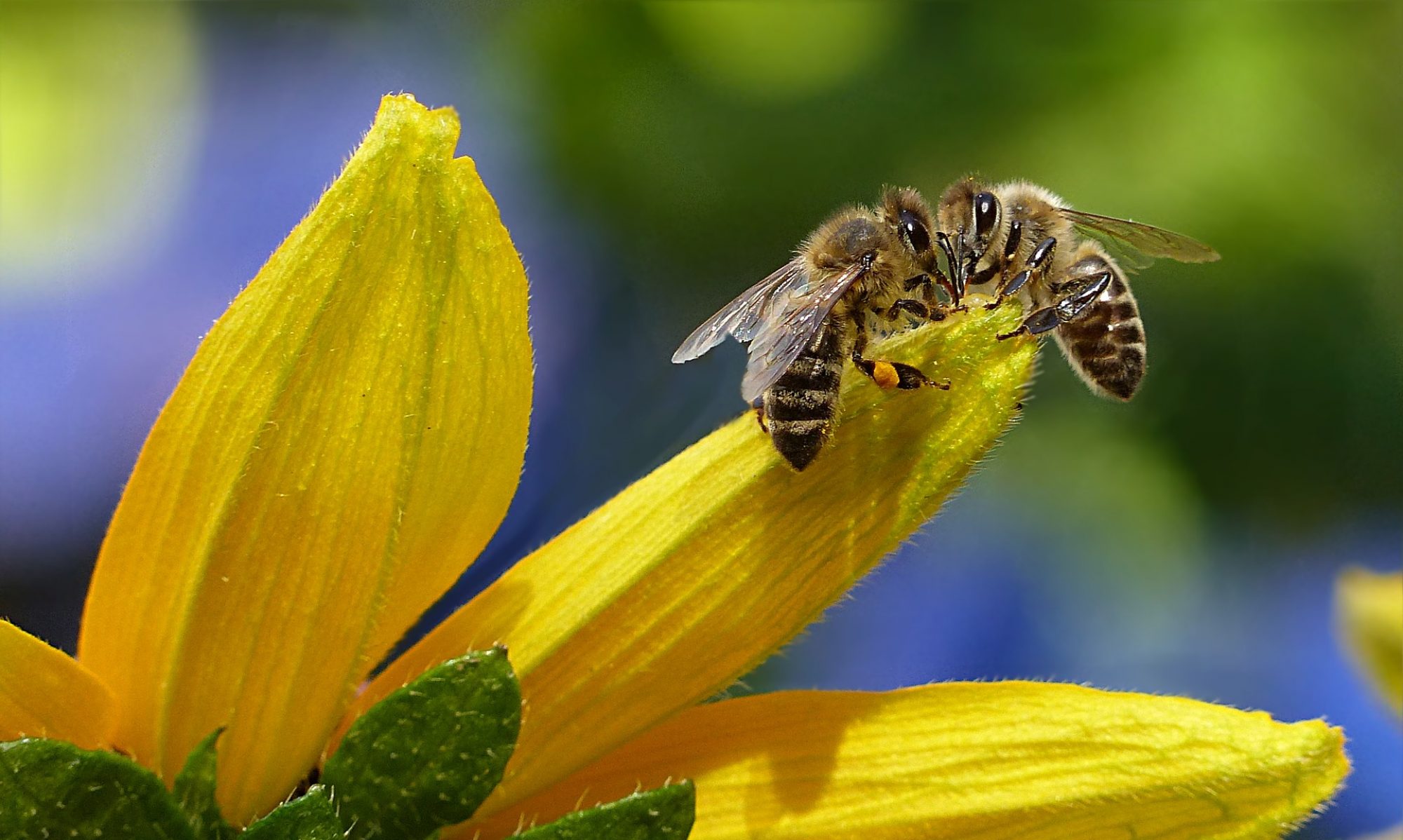

“The only thing necessary for the triumph of evil is for good men to do nothing.” ― Edmund Burke
Food.
If you stop to think about it, you will realise that in the bushveld the bulk of the plants tend to flower once a year after the rains, and the girls have to work really hard to store up reserves for when there is little to no food.
In contrast are our cities. Between the mad bustle of peak hour traffic, massive shopping malls and sprawling cookie cutter residential complexes, there are people among us who love their little garden sanctuaries and want to see beauty all year. People who collectively plant a vast variety of plants and trees that between them bear flowers all year.
And suddenly, urban bees have a place to thrive. They find food all year, they are safe from hectic commercial farming pesticides, and so the honey is clean. Some of the hive pests that can be a huge problem in rural areas are vastly reduced because they cannot complete their life cycles for small reasons such as the absence of herbivore dung to lay eggs in, or lack of soil around the hive to pupate in.
The reality is that everyone is going to have to pitch in to actively expand urban bee reserves so that our girls can be safe, heal, become strong again. And it is the easiest thing to do right here in our cities, in the concrete jungles and in suburbia.
The simplest way to help is to plant bee plants. Pick bee plants, pick a variety so there are flowers out all year, plant your side walks and your driveways, add planter boxes to your patios, gift people plantable flowers and pots and drum up enthusiasm. Every flower box on every balcony makes a difference. Plant plant plant!
Side note: Raw unfiltered honey contains tiny bits of pollen, and when you eat local honey you ingest local pollen which helps the immune system deal with seasonal allergies induced by the very plants where you live.
Health
The next incredibly important consideration revolves around where the bees live, and this is crucial to a swarms health. There are next to no natural homes for bees in the city, and so it is critically important that we move up a bit and make some space for them. They don’t need much, a corner in a garden, flat roofs, any out of the way space in complex gardens. Every day, good people are offering them homes where they can be cared for, protected, studied, monitored. They are also guarded against human theft, vandalism and destruction by those would kill a whole swarm for a once off, easy harvest. Interventions can happen early and proactively by volunteer beekeepers whose ranks are filled mostly by people that initially volunteered space and ended up getting a bee suit to care for their own hives, and the next thing they are helping others to expand their local reserves.
As a volunteer organisation, our biggest challenge is time. Anyone who has a day job and/or a family will attest to the challenge of maintaining even a handful of hives alone, especially if they are not located at our own homes. Compounding the problem is the general quality of hives available from many suppliers. The good ones are often out of stock and one is forced to buy elsewhere, and while everyone tries to stick to a standard, we invariably end up with poorly fitting components due to general inconsistency. This translates to poor hives which in turn requires a lot more extra human effort and unnecessary costs in rectifying, and because people are busy, things end up going uncorrected. The bees get unhappy, abscond, or die, and people get despondent and abandon what should have been an extremely rewarding labour of love.
There are many popular hive designs out there, all have their pros and cons, and really it is up to each beekeeper to decide what works best for them. We needed a hive design that firstly provides the ultimate home designed to support the modern swarm, secondly reducing the increasing amount of human effort required to monitor for diseases and pests, and thirdly, lets us know if there are problems without being visited.
Technology
Enter the Urbee Precision Smart Hive. Based on the Langstroth design using CAD, optimised for our own Apis mellifera, cut using high precision computer controlled CnC machines. The result of this process would make any German proud: Guaranteed sub millimetre tolerances, perfect bee spaces, flawless alignment and solid, durable construction.
Such precision on its own vastly aids individual swarms to healthy and strong as they do not have to work harder than they need to at home. Enabling the bees to easily maintain proper ventilation, temperature and moisture levels in a hive year round effectively combats major contributors to colony collapse such as bacterial, viral, fungal infections. This in turn leads to unstressed, healthy swarms that can now do much better at defending their hives against parasitic infestations as they have for millennia.
To further support them, we have added a number of anti parasite features. Rounded internal corners and tight fits remove all crevices for parasites to hide in and the bees can chase them till they are killed, leave the hive or get caught in the built in beetle and mite traps. Entrance screen options for larger threats, and a bee and honey friendly heat treatment process that effectively controls Verroa Destructor mites without chemicals.
Each smart hive houses a variety of electronics: thermometers, hygrometers, barometers, microphones (yes, you read that right), built in mechanical weighing scale, GPS locator and a 3G\WIFI module. These monitor the hive on a 24/7 basis and readings are automatically uploaded to our database in the cloud. Everything is controlled by a low power Arduino micro computer built into the lid, all powered by solar and heat tolerant, long life batteries.
The hive can now be monitored remotely from a mobile app or website for a range of conditions without needing human inspection. We can tell that a hive is too hot, or too moist or too dry. We can tell that total hive weight is not increasing as it should when honey is supposed to be stored. We can intelligently trend conditions in a hive and send alerts to the beekeepers app if a hive is outside normal behaviour.
Most importantly, we can define what normal is by defining trends across large quantities of healthy hives. The more data we have, the better it gets, so we have integration options too so other organisations can access and contribute to our data,
Logistics
We are excited! We are also non profit. We hope to get businesses to sponsor some of the hive costs to make them more accessible, but until then, we depend on you to buy our honey and sexy beard and skin oil because that is how we pay for all this.
We also need space in your gardens, and maybe you will fund a smart hive for that garden, and maybe you will suit up and learn to look after that swarm with our help. We need experienced beekeepers to help the newbees (hee) to care for their own swarms, and teach them to rescue wild swarms from extermination and re-home them. We need beekeepers associations to guide us with their vast cumulative experience. We need someone at City Parks to help us get permission to put hives down in the right out of the way places and protect them. We need whomever decides what to plant next to roads to start planting bee plants. We need lots of things, but mostly, we need good people.
Help save them. Everyone can. Start with buying something amazing.
500g Premium Highveld Honey
Pure unadulterated Highveld Bluegum in a hipster friendly jar complete with a little wooden honey thingy